
Selling a house is inherently stressful because it involves trusting an agent to manage complex financial risks, navigating market unpredictability, and what may also occur is processing the emotional grief associated with leaving a long-term residence.
Understanding why selling a house is stressful allows homeowners to better manage these intense feelings; that when guided by an agent who is truely dedicated to your optimal outcome replaces the stress with clear communication and proactive organisational strategies and furthermore allowing yourself mental health breaks that preserve well-being throughout the transition.
TRUST and the EXPERTISE and INTEGRITY of your agent is key.
Most homeowners approach a sale focusing primarily on the financial outcome, yet they are often blindsided by the profound psychological toll of the process. It is not just about the logistics of cleaning, staging and viewings; it can also be about leaving a space that holds your history. This emotional friction often leads to decision fatigue and anxiety.
Understanding the intersection of psychology and property is essential for maintaining your composure and securing a successful transition. In this guide, we explore the deep-seated reasons why your brain may resist the move and examine the emotional stages of the selling journey. You will discover practical strategies to reduce your mental load through intentional design, navigate market uncertainty with confidence, and reframe the sale as a positive evolution for both you and your community.
The Psychology of Home: Why Your Brain Resists the Move

Selling a home is cited as one of life’s most significant stressors, often ranked alongside major disruptions like divorce or career loss. While a standard real estate perspective views a house simply as a financial asset to be traded as quickly as possible, the human brain operates on a much deeper, biological level. My background in psychology highlights that our relationship with our living space is governed by the limbic system, the part of the brain responsible for our emotional responses and survival instincts.
The limbic system views the home as a primary source of safety and stability. To your brain, the house is not just a building; it is a sanctuary that provides protection from the external world. When you begin the process of selling, your brain may trigger a 'threat' response because you are preparing to relinquish your primary 'den.' This explains why selling a house id so stressful for so many; the transition is not merely a financial transaction, but a profound disruption of your sense of self and security. Traditional agencies often overlook this, treating the property as a listing and Commission goal, rather than an extension of the owner's identity.
For residents in the Gold Coast Hinterland, this psychological weight is often amplified. Many local properties serve as literal retreats from the hustle of city life, making the emotional detachment even more complex. These homes are frequently viewed as a sanctuary where every landscape choice or architectural detail reflects a personal milestone. Recognizing this connection is essential for a healthy transition. By providing transparent property evaluation that takes into account market data however fully focused on the unique character of these Hinterland retreats, l bridge the gap between the brain's need for safety and the practical requirements of a successful sale. Understanding these biological triggers is the first step in moving from a state of resistance to one of understanding one’s own individual readiness.
The Five Emotional Stages of Selling Your Property
Understanding the biological basis of stress allows us to categorize the experience into five distinct emotional stages. In the context of the Gold Coast Highland region, these stages are often intensified by the unique nature of the properties. These homes are rarely cookie cutter suburban blocks; they are often custom built sanctuaries or heritage acreages that represent a lifetime of curation.
Anxiety serves as the initial gatekeeper. This stage is driven by the unpredictability of the market. Sellers often worry about timing or whether the true value of their Hinterland retreat will be recognized by a buyer who understands the nuances of the local landscape. This stage is fueled by the fear of the unknown, particularly when local market data for unique Hinterland properties is more complex to interpret than standard urban listings.
Overwhelm follows during the preparation phase. The mental load of decluttering, organising repairs, and staging can feel insurmountable. This is where my qualified interior design insights become practical tools for mental health. By breaking down the aesthetic requirements into a structured plan, the preparation moves from a chaotic list of chores to a purposeful transformation. This structured approach helps manage the cognitive load and reduces the anxiety of being buried by tasks.
Frustration typically emerges during the negotiation phase. In high value areas like the Gold Coast Hinterland, valuations are deeply personal. When a buyer’s offer or a building report challenge the owner’s perspective, it can feel like a personal critique of one’s lifestyle choices. This emotional friction is a major reason why selling a house is so stressful; it is a period where the subjective value of a home clashes with the objective mechanics of a real estate transaction.
Grief is the most profound stage, occurring as you begin to pack away the physical markers of your life. In the Highland region, where homes often serve as a retreat from the world, saying goodbye to a specific view or a garden you have nurtured involves a legitimate mourning process. Recognizing this as a valid emotional response rather than a weakness is essential.
Relief is the final stage. It arrives once the contract is unconditional and the transition is finalized. This sense of closure allows the seller to finally detach their identity from the physical structure, providing the mental space required to move forward with clarity.
The Stress of Uncertainty: Navigating Market Fluctuations
Unpredictability is the primary fuel for seller anxiety. In the Queensland market, and specifically within the Gold Coast Hinterland region, price fluctuations can feel erratic if you are relying on headlines or generic data. When a homeowner cannot predict the outcome of their sale, the brain’s amygdala remains in a state of high alert. This constant vigilance results in a sustained cortisol spike, which contributes to the physical and mental exhaustion commonly reported by sellers. This physiological reaction is a core reason why selling a house is stressful; your nervous system is essentially reacting to a perceived threat to your financial and personal security.
The solution to this psychological strain lies in replacing speculation with precision. Many homeowners turn to automated online algorithms for a quick estimate, but these generic tools are notoriously inaccurate for unique Hinterland properties. They lack the capacity to value the specific orientation of a slope, the maturity of a curated landscape, or the premium of a bespoke interior finish and a view. These black box valuations often create false expectations or unnecessary fear, further complicating the emotional landscape.
Providing transparent property evaluation involves more than just delivering a number; it requires explaining the methodology behind that figure. By grounding a valuation in deep local expertise and tangible market evidence, we provide the brain with a logical framework. When you understand the why behind a price point, the fear of the unknown diminishes. This clarity transforms the property from an unpredictable variable into a manageable asset. Reducing this information gap is essential for maintaining emotional equilibrium throughout the transaction, allowing you to make decisions based on data rather than distress.
Reducing Mental Load through Design and Environment
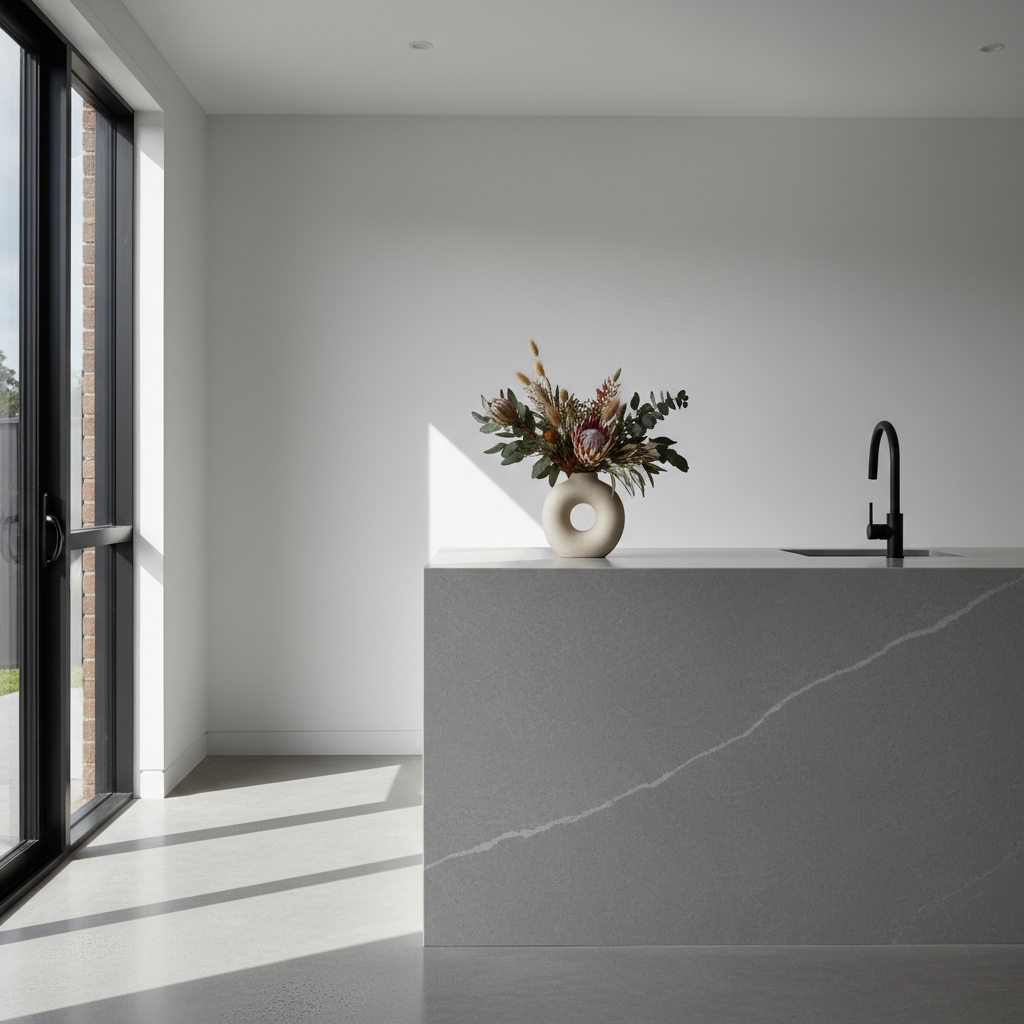
Clarity in the physical environment directly correlates to clarity in the mind. When a home is filled with unfinished maintenance tasks, excess furniture, or deeply personal clutter, the brain experiences what designers call visual noise. This constant stream of stimuli forces the mind to continuously process incomplete loops, significantly contributing to the feeling of being overwhelmed. Understanding why is selling a house so stressful requires looking at your immediate surroundings; a cluttered home keeps you tethered to the past while simultaneously weighing you down with a mental list of things to fix.
Leveraging qualified interior and exterior design plans allows you to systematically close these loops. The goal is to transition the property from a personal sanctuary to a high-performance asset. This process is psychologically restorative for the seller. By neutralising color palettes and defining specific zones within a room, you begin the emotional process of detaching. When a room looks ready for someone else, your brain begins to accept that the transition is already underway. Small, purposeful changes can provide a sense of control that counters the unpredictability of market fluctuations.
Practical steps to reduce this mental load include: - Clearing all flat surfaces to lower the cognitive processing demands of a room. - Addressing minor aesthetic pain points, such as outdated hardware or scuffed baseboards, to eliminate the subconscious guilt of procrastination. - Maximising natural light to help regulate cortisol and improve mood during high-stress weeks.
The relationship between the interior and the landscape is vital. A well-curated garden does more than add curb appeal; it serves as a psychological anchor. During the high-pressure periods of open homes, a structured Hinterland garden provides a dedicated space for the seller to find a sense of peace. The sight of a manicured native border or a clean outdoor living area acts as a visual reminder of order amidst the logistical chaos of the market. By refining the environment, you create a vital buffer against the mental fatigue of the transaction.
Red Flags and Real Estate Ethics: What Actually Causes Stress
The psychological weight of a sale is frequently exacerbated by professional friction. Identifying red flags when selling is critical to maintaining your mental health. A primary contributor to why is selling a house so stressful occurs when an agent provides no clear property valuation and deflects what their due diligence believes the property can achieve, not an inflated, unrealistic price estimate to win your business, or a generated CMA of median property sales and then to quietly coerce price reductions weeks later. This bait and switch is a cycle of hope and disappointment that is physically and emotionally draining.
Transparency and ethics are the foundations of a low stress transaction. Poor communication and vague feedback from an agent create an information vacuum. At My Property Style, I mitigate this by providing transparent property evaluation rooted in local Gold Coast Hinterland projected data and my design knowledge. By choosing a relationship based on integrity rather than no strategy no professionalism, you regain a sense of agency. Honest, evidence based advice ensures that you are never left guessing about the status of your sale or the reality of the market. This professional clarity is the single most effective way to protect your well being and absolutely removing the stressors during the sale transition.
Reframing the Sale: From Personal Loss to Community Gain

Transitioning from professional ethics to the psychological concept of purpose provides a powerful tool for managing the emotional toll of a move. One of the most effective ways to counter this sense of loss is through cognitive reframing, which involves shifting the focus from what is being relinquished to the positive impact the transition creates for others.
At My Property Style, this is achieved through a structural commitment to community support. By pledging 10% of all commissions to homelessness connect and the Animal Welfare League Queensland, we integrate a mission driven purpose into the transaction. In the Gold Coast region, where the demand for crisis accommodation and animal welfare services is emergency high, this contribution facilitates localised, tangible change. For a seller, knowing that the departure from their Hinterland sanctuary directly funds a roof for a vulnerable individual or medical care for a sheltered animal changes the fundamental narrative of the sale.
When the brain identifies an action as a contribution to the greater good, it releases neurochemicals associated with satisfaction and pride, effectively dampening the limbic system's threat response. The emotional weight of leaving is balanced by the significance of giving. This transformation ensures the sale is not merely a financial exit, but a meaningful milestone that strengthens the Gold Coast community while protecting your personal mental equilibrium.
Selling a house is a significant life event that naturally brings a mix of excitement and anxiety. By focusing on your mental health and with the support of an agent assisting each step for you.
You can navigate this transition with much less stress. If you find yourself needing a steady hand to guide you through the complexities of the market, expert help is always available. You can find out more about My Property Style my life experience, my understanding of exactly what the experience of buying and selling a property represents and the fact that my strategy is to honestly support you